Predict overall survival
97%of ctDNA negative patients vs. 71.8% of ctDNA positive patients had 36-month OS.1


Medical Tests
Signatera™ is redefining the standard for MRD assessment through personalized, tumor-informed molecular testing
By custom-designing each assay to a patient’s unique cancer signature, Signatera™ identifies colorectal cancer recurrence with high sensitivity—detecting molecular relapse months ahead of traditional imaging. This window of lead time empowers clinicians to intervene earlier, optimize adjuvant therapy, and make more confident, treatment decisions.
Order nowof ctDNA negative patients vs. 71.8% of ctDNA positive patients had 36-month OS.1
ctDNA-positive patients who achieved sustained clearance had 100% OS at 24 months.1
Signatera™ MRD status predicted overall survival: Patients who tested Signatera™-positive after surgery had significantly worse overall survival (OS) compared to those who were Signatera™-negative.1
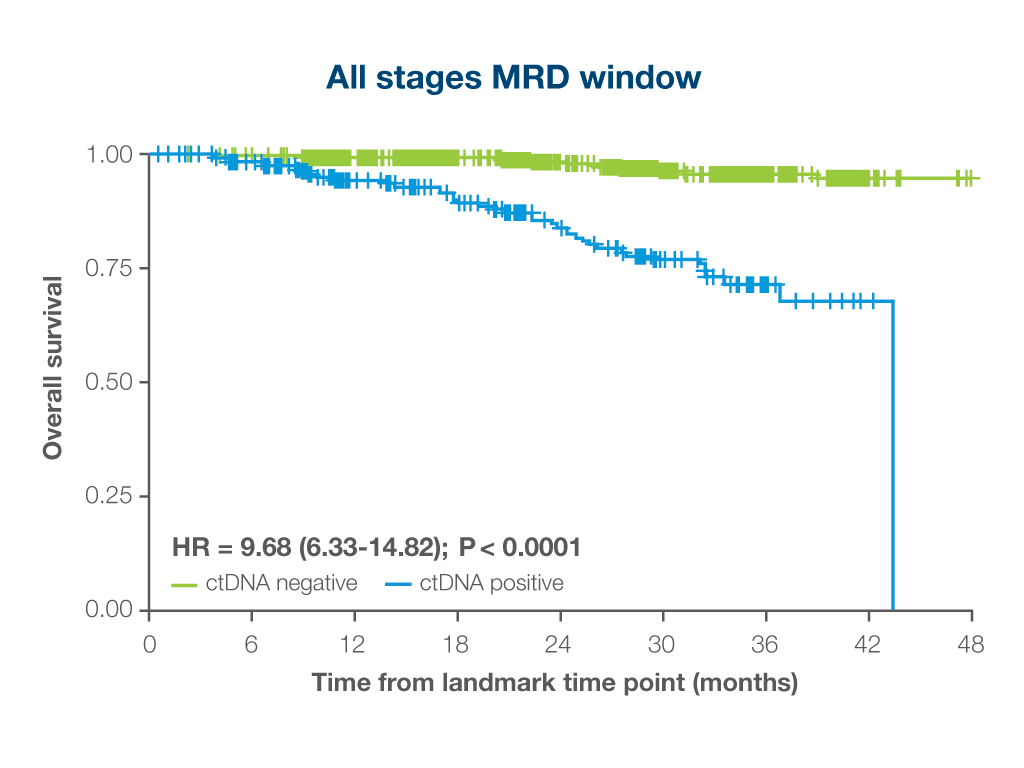
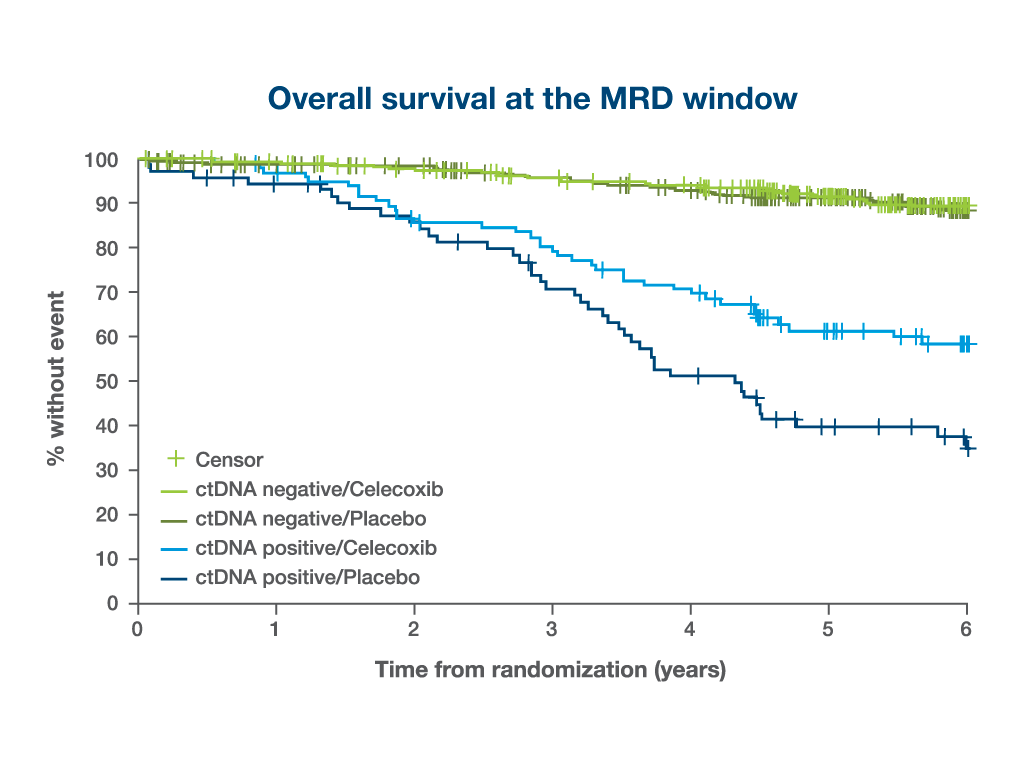
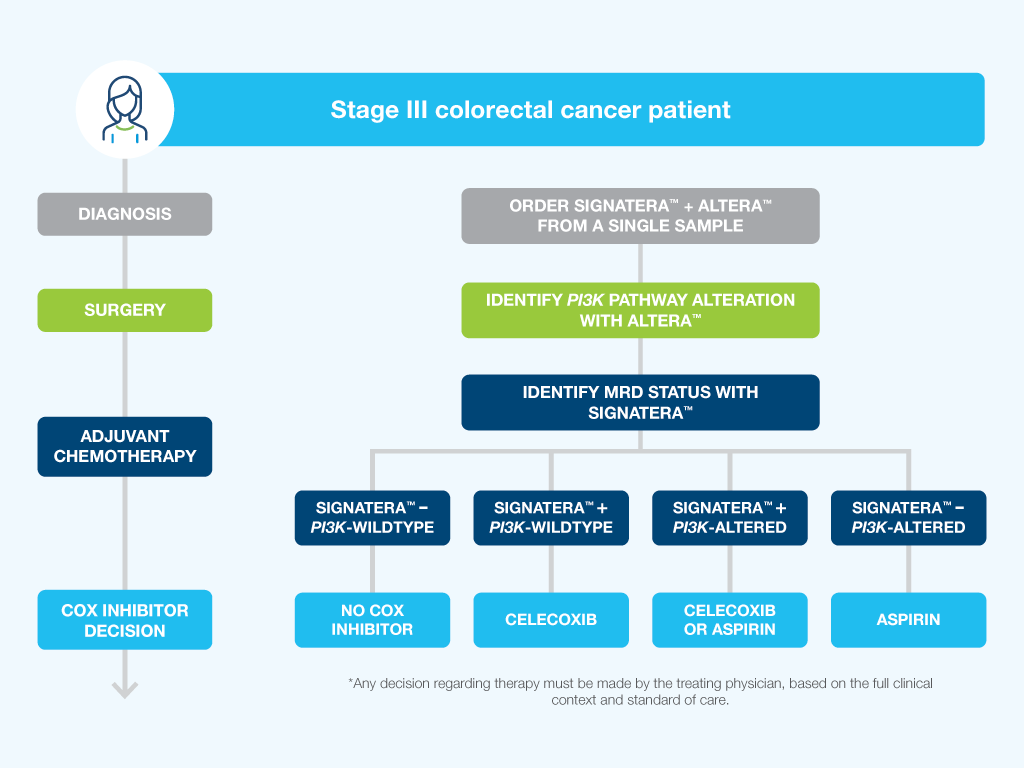
CALGB (Alliance)/SWOG 80702 publication JAMA Oncology, evaluating the predictive and prognostic value of Signatera™ in 940 stage III colon cancer treated with adjuvant FOLFOX ± celecoxib:
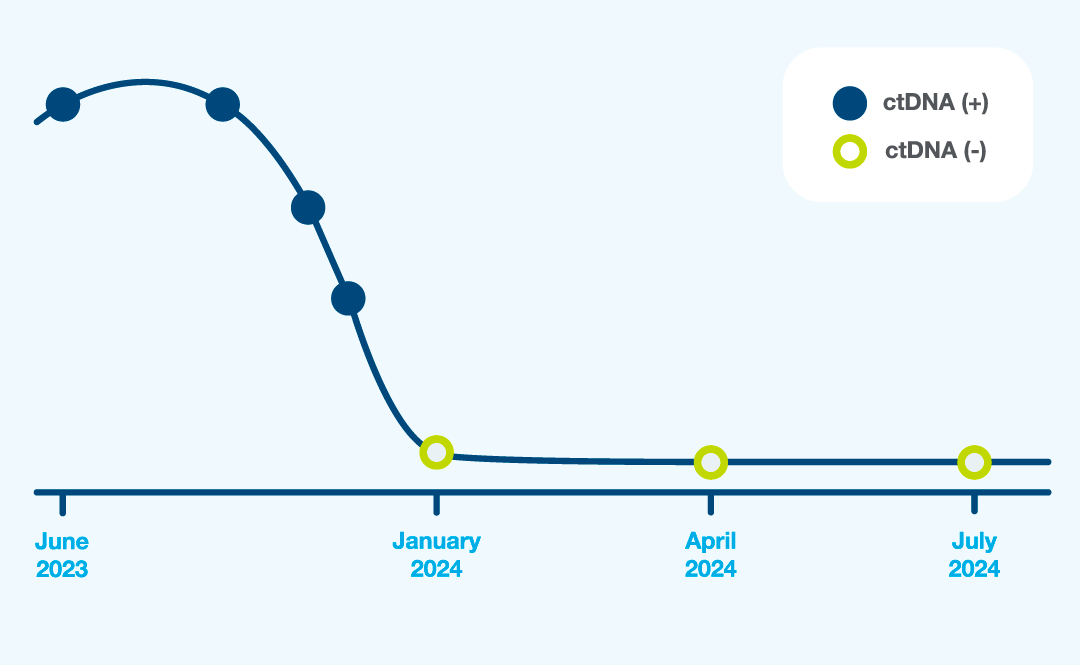
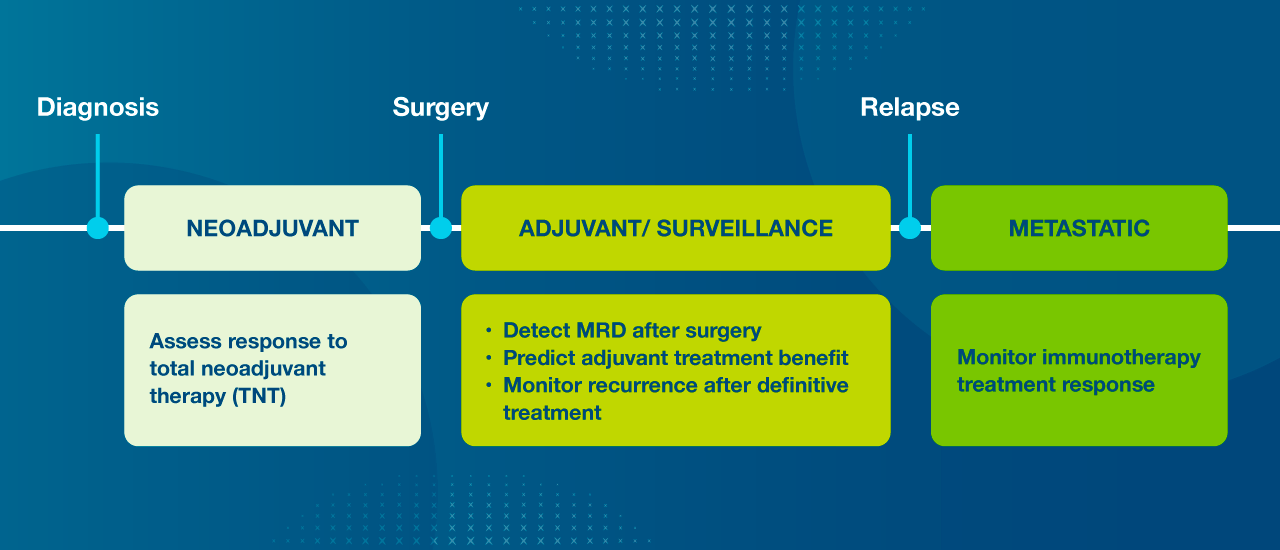
Monitor neoadjuvant response with serial Signatera™ testing. Identify low risk patients who are ctDNA-negative to potentially support a nonsurgical “watch and wait” approach.
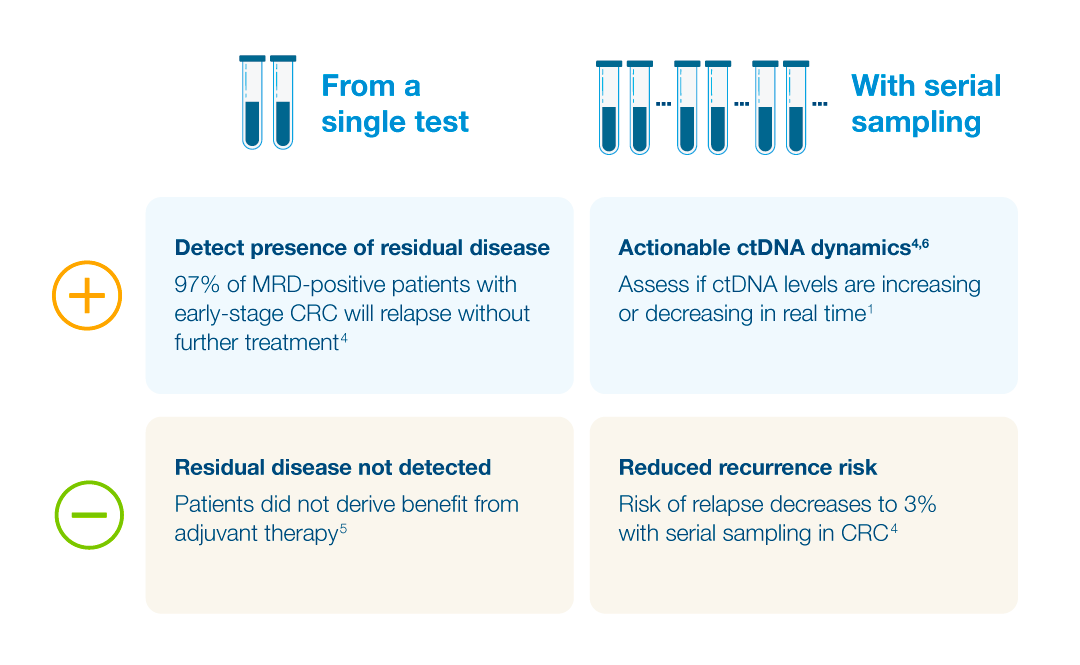
Identify patients at high risk of recurrence who may benefit from adjuvant chemotherapy.
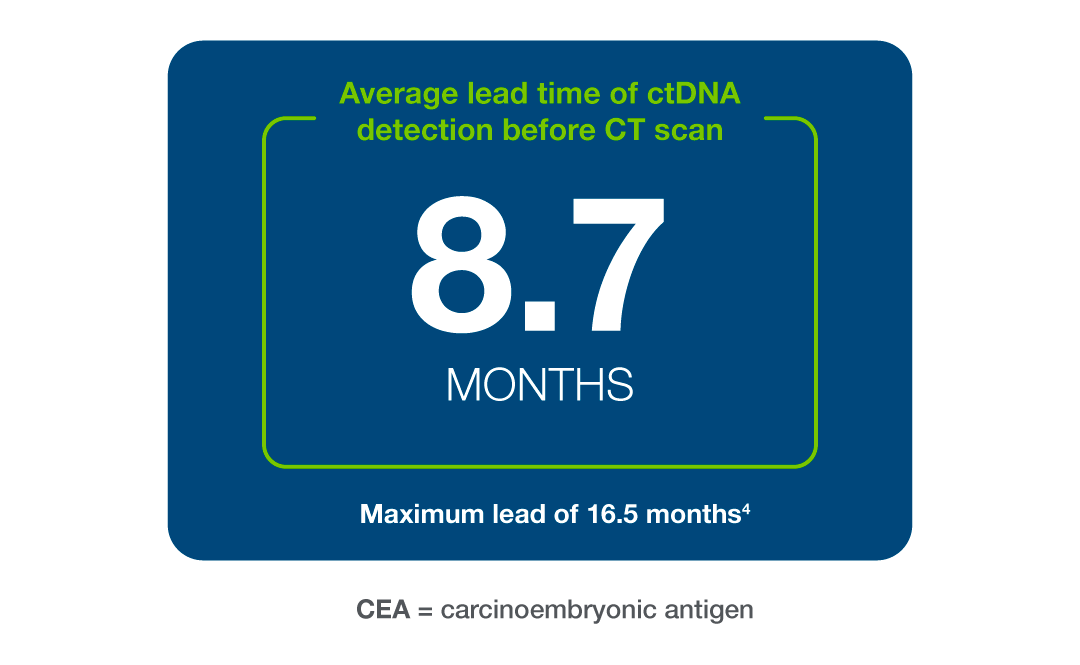
Assess for MRD more accurately than current risk assessment methods:
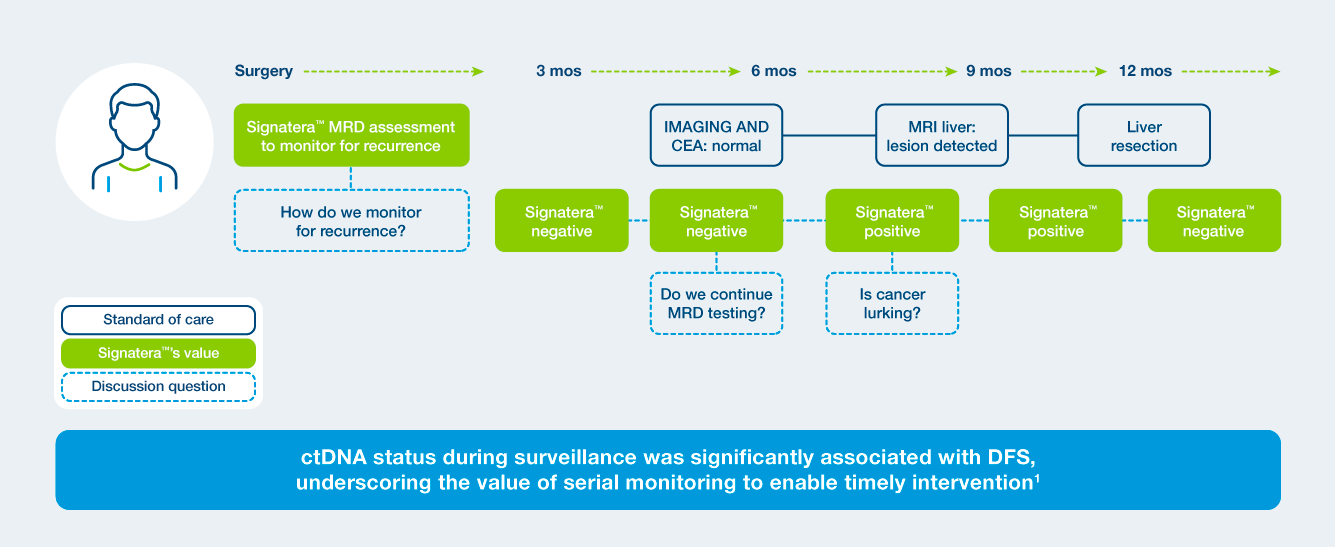
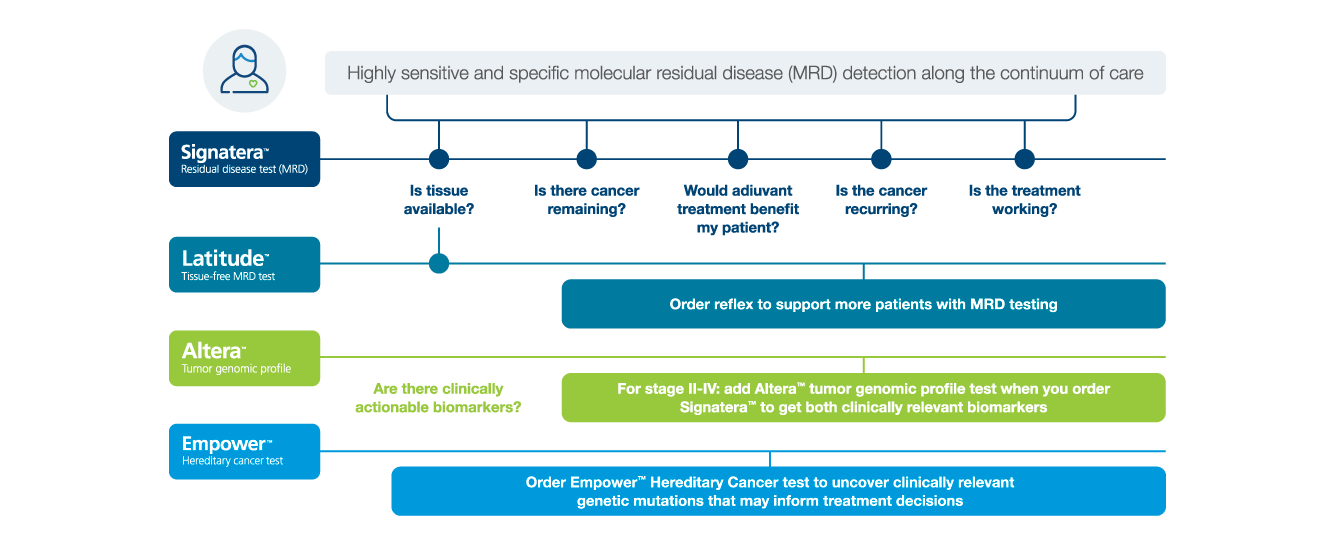
Stage II-IV and oligometastatic colorectal cancer (CRC) in the adjuvant and recurrence monitoring settings
Stage II-IV breast cancer in the neoadjuvant setting, regardless of subtype Stage IIb and higher breast cancer in the adjuvant and recurrence monitoring settings
Muscle invasive bladder cancer (MIBC) in the adjuvant and recurrence monitoring settings
Stage I-III non-small cell lung cancer (NSCLC) in the surveillance setting
Stage II-IV ovarian, fallopian tube, or primary peritoneal cancer in the adjuvant and recurrence monitoring settings
For monitoring of response to immune-checkpoint inhibitor (ICI) therapy for patients with any solid tumor
© Copyright 2022 - 26 | All Rights Reserved.